
Fission and Fusion Bombs
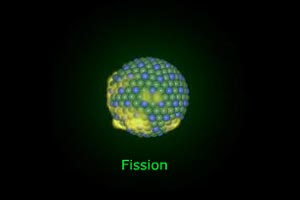
 Fission
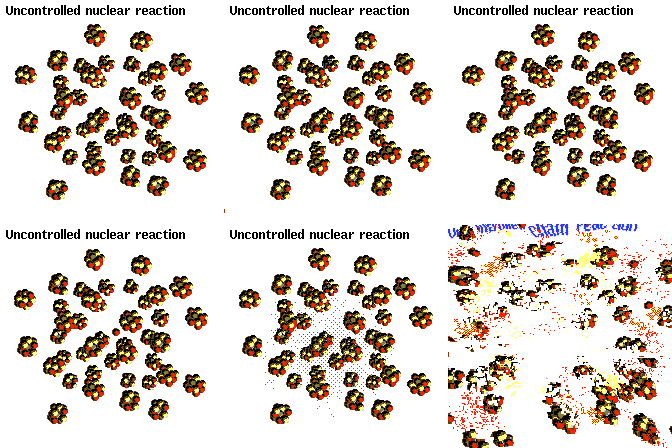
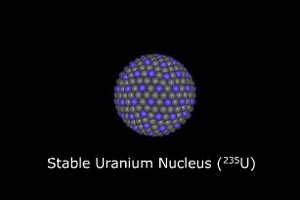
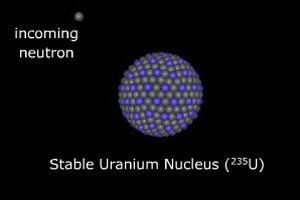
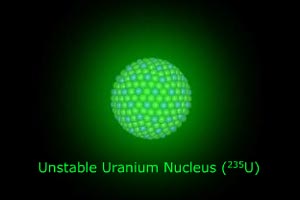
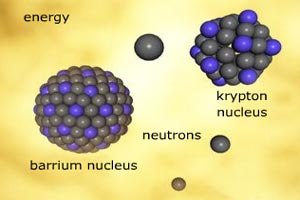
= the splitting apart of atomic particles. When they break, they lose some
mass (imagine this as the 'glue' that held them together) which is released
as energy (as in E=MC2). In an atomic explosion,
the pieces that originally split smash into other atoms, which then break
and hit still more, etc, etc. This is the type of explosion that the bombs
dropped on Hiroshima and Nagasaki utilized. Fission
= the splitting apart of atomic particles. When they break, they lose some
mass (imagine this as the 'glue' that held them together) which is released
as energy (as in E=MC2). In an atomic explosion,
the pieces that originally split smash into other atoms, which then break
and hit still more, etc, etc. This is the type of explosion that the bombs
dropped on Hiroshima and Nagasaki utilized.
 Fusion
= the joining together of atomic particles. When these (smaller) particles
join, a tiny portion of their mass is converted into energy (as in E=MC2).
A weapon with this type of explosion is called a hydrogen bomb and can
be significantly more powerful than a simple fission device. Fusion
= the joining together of atomic particles. When these (smaller) particles
join, a tiny portion of their mass is converted into energy (as in E=MC2).
A weapon with this type of explosion is called a hydrogen bomb and can
be significantly more powerful than a simple fission device.
Interestingly, the best way to 'smash'
the pieces together tightly enough to fuse is by compressing them with
an atomic explosion. Thus, a fusion device is first 'triggered' by a fission
explosion - squeezing the core tightly enough together - which result in
the fusion reaction beginning.
|